
ABSTRACT
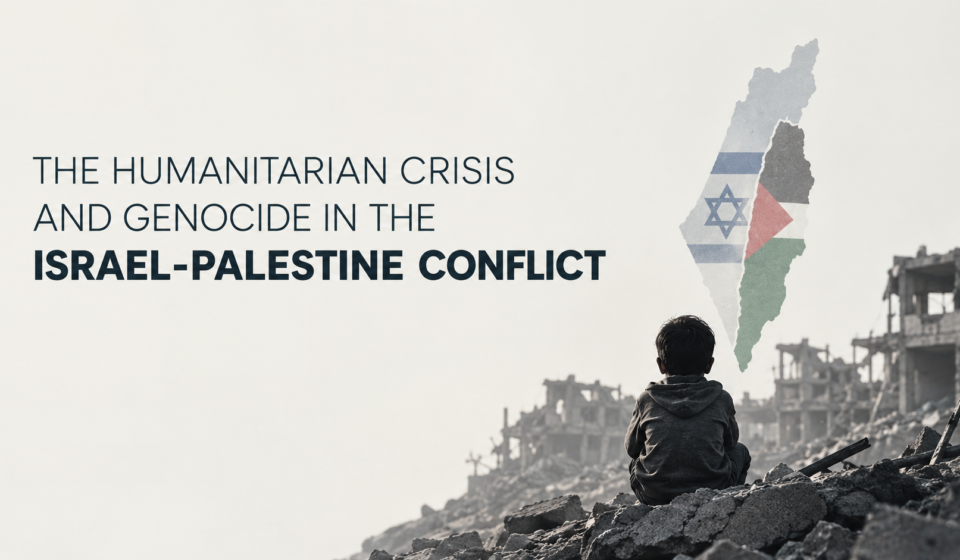
Owing in particular to the Hamas attack on Israel in October 2023, which caused numerous civilian casualties and led to Israel’s military response, the ongoing Israel-Palestine conflict has worsened into a serious humanitarian crisis. The paper explores the conflict’s historical background, following its origins in the late 1800s and the emergence of nationalism among Arab and Jewish communities alike. It draws attention to the claims of genocide made against Israel by human rights organisations and legal scholars, who contend that Israel’s military operations could violate international law in accordance with the Genocide Convention. With a collapsed healthcare system, a shortage of basic supplies, and massive displacement, the humanitarian situation in Gaza has gotten far worse. The goal of the paper is to present a thorough understanding of the historical context of the war, the implications of claims of genocide, and the pressing need for an international reaction to lessen Palestinian people’s suffering.
I. INTRODUCTION
Allegations of genocide against Israel’s actions concerning the Palestinian people have led to the current conflict between Israel and Palestine to develop into a serious humanitarian catastrophe. The origins of this struggle can possibly be found towards the end of the nineteenth and beginning of the twentieth centuries when tensions with the local Arab community arose due to the emergence of Zionism in Europe and the immigration of Jews to Ottoman Palestine.
After Hamas launched a devastating attack on southern Israel in October 2023, killing over 1,200 civilians—mostly Israelis—the situation has become worse in the following years. Over 1.7 million people were displaced, and over 30,000 people died as a consequence of the Israeli military’s attacks on Gaza in retaliation.
Gaza’s humanitarian crisis is currently out of control, with people having no access to fuel, food, water, or power. The world’s child malnutrition rates are at an all-time high, while health services have declined. A $481 million flash appeal has been launched by the UN to meet the immediate needs of Palestinians in Gaza and the West Bank.
In light of this, prominent scholars and human rights experts have said that the treatment of the Palestinian people by Israel via its policies and deeds may amount to genocide. This paper will examine the conflict’s historical background, the development of the idea of genocide, and the consequences of these allegations under international law.
II. HISTORICAL CONTEXT
With origins dating back to the late 1800s, the Israel-Palestine conflict is one of the longest and most intricate conflict in the modern history.
A. EARLY TENSIONS AND THE RISE OF NATIONALISM
The Middle East saw great turmoil in the late 1800s, especially with the rise of Arab and Jewish nationalist organisations. The demand for self-determination and the prevalent anti-Semitism in Europe gave rise to the Zionist movement, which aimed to create a Jewish state in Palestine. The First Zionist Congress convened in Basel, Switzerland, in 1897, and it was at this conference that Theodor Herzl laid out the plan for creating a Jewish state in Palestine[1].
Arab nationalism also gained momentum during that period, which was driven by a rising sense of cultural identity and resistance to foreign influence. Tensions between the two groups grew as the Arab population of Palestine started to see the Jewish immigrants as a danger to their homeland and way of life.
B. BALFOUR DECLARATION AND THE BRITISH MANDATE
Due to the League of Nations mandate system after World War I and the fall of the Ottoman Empire, Palestine fell under British rule. Tensions were further escalated by the British government’s 1917 Balfour Declaration[2], which supported the creation of a “national home for the Jewish people” in Palestine. Many Arabs saw the proclamation as a betrayal since it disregarded their desires for autonomy and self-determination.
Massive Jewish immigration to Palestine during the British mandate era resulted in demographic shifts and increased hatred between Jewish settlers and the Arab population. The problems of coexisting and the rising antagonism between the parties were brought to light by violent confrontations like the Arab riots of 1920 and 1929.
C. THE 1948 WAR AND THE ROAD TO STATEHOOD
Global sympathy for the plight of Jews developed in the wake of World War II and the Holocaust, which boosted calls for the creation of a Jewish state. UN Resolution 181[3], which was put out by the UN in 1947, proposed that Palestine be divided into Jewish and Arab states and that Jerusalem should fall under international jurisdiction. While the Arab leadership saw the proposal as unfair and a violation of their rights, the Jewish community approved it[4].
The state of Israel was formed on May 14, 1948, by David Ben-Gurion declaring it. As a result of this declaration, the first Arab-Israeli War broke out. After the war, the Arab troops faced a major setback and around 750,000 Palestinians were forced to leave their homes—a tragedy known as the “Nakba” or “Catastrophe”[5]. A series of ceasefire agreements brought the war to an end in 1949 and gave Israel authority over a greater territory than the UN had originally suggested.
D. CONTINUED CONFLICT AND DOMINANCE
The war’s aftermath in 1948 laid the foundations for the current conflict. The West Bank and East Jerusalem fell under the authority of Jordan, while the administration over the Gaza Strip was taken over by Egypt. Tensions increased over the 1950s and 1960s, leading to the 1967 Six-Day War. Israel’s anticipatory assault against Egypt, Jordan, and Syria led to its victory in East Jerusalem, the West Bank, the Golan Heights, the Gaza Strip, and the Sinai Peninsula.
Major political and demographic changes occurred from the colonisation of these areas. The spread of Israeli settlements across the West Bank made the possibility of a two-state solution much more unlikely. Since its establishment in 1964, the Palestinian Liberation Organisation (PLO) has been the main organisation fighting for the rights of the Palestinian people and the creation of an independent state.
E. PEACE EFFORTS AND THE INTIFADAS
Two important Palestinian uprisings, known as the Intifadas, occurred in the late 20th century. Three main features of the First Intifada (1987–1993) were large-scale rallies, acts of civil disobedience, and violent clashes with Israeli authorities. It brought the suffering of the Palestinian people to the attention of the world, leading to the Madrid Conference and the Oslo Accords in the early 1990s[6]. The ultimate goal of these accords was to provide the groundwork for future peace efforts and the acknowledgement of a Palestinian state.
Ariel Sharon’s visiting the Al-Aqsa Mosque complex served as the catalyst for the Second Intifada (2000–2005), but the peace process failed in the years that followed. The brutality that characterised this revolt, including suicide bombings and military operations, deepened the rift between Israelis and Palestinians.
F. THE GAZA REGION AND LATE-STAGE EVENTS
The forces and settlements were unilaterally withdrawn by Israel from the Gaza strip in 2005, although it maintained control of the region’s borders, airspace, and marine access. After the Islamist terrorist organisation Hamas came to power in 2006, there were more disputes and tensions, which resulted in a number of armed conflicts, notably the wars in 2008–2009, 2012, and 2014. Since then, blockades and military actions have worsened the human rights situation in Gaza and caused extensive devastation and substantial civilian fatalities[7].
There have been sporadic increases in violence in the continuing war; the most recent one was in October 2023, when Hamas attacked Israel severely, and Israel responded with violence. With both sides well established in their positions, this cycle of violence has made attempts towards peace and settlement much more difficult.
III. CURRENT HUMANITARIAN CRISIS
The ongoing struggle that began after Hamas’ October 7, 2023 assault on Israel has made the humanitarian crisis in the Gaza Strip even more severe. Israel’s brutal military response to this war has left the Palestinian people in a state of widespread destruction and despair. International observers, human rights organisations, and legal experts are paying close attention to the situation as it develops and are becoming more concerned that these acts might be classified as genocide under international law.
A. ESCALATING VIOLENCE AND HUMANITARIAN COLLAPSE
The Gaza Strip has been subjected to constant bombardment since the war began, which has caused a considerable loss of life and infrastructural destruction. Over 30,000 Palestinians are said to have died, with women and children accounting for a significant share of these deaths. The UN Special Rapporteur, Francesca Albanese, on the occupied Palestinian territory, has emphasised that the huge-scale attack on Gaza indicates an objective to exterminate the Palestinian people physically. This argument aligns with the standards set out in the UN Genocide Convention[8], which lists certain actions—such as the extermination of members of a particular group or infliction of grave mental or physical harm—that serve as acts of genocide.
Due to the Israeli blockade, which has severely limited the movement of basic products like food, water, and medical supplies, the humanitarian situation has drastically deteriorated. Hospitals and sanitary facilities are severely impacted by the 90% drop in electrical supply brought about by the blockade. Since more than 75% of Gaza’s population is internally displaced, a larger percentage of people are living in unclean, cramped conditions, which increases the possibility of epidemics. The humanitarian situation has been made worse by the rise of preventable illnesses and the accumulation of garbage due to poor sanitation and lack of clean water supplies.
B. IMPENDING FAMINE AND HEALTHCARE COLLAPSE
Some analysts characterise these circumstances as imminent famine as a result of blockades and military activities. Humanitarian organisations have warned that the general population is suffering from severe food shortages and is not receiving enough nourishment to live. According to UN reports, the situation might worsen into widespread hunger if sufficient and rapid relief is not provided. The population is now vulnerable due to the loss of agricultural land and the difficulty of importing food, with many families unable to provide even the most basic needs.
Gaza’s medical system is about to collapse. There were thirty-six hospitals in the area before the war. However, as of early 2024, just seventeen were functioning that too partly. These hospitals are overflowing with victims and are short of basic medical supplies. Since hospitals are unable to offer proper treatment, patients are dying from curable diseases, and medical professionals are putting themselves in grave danger while trying to provide care while being attacked. There has been widespread trauma to the population, and mental health problems are predicted to last for many generations.
C. INTERNATIONAL LAW AND GENOCIDE ALLEGATIONS
The deliberate nature of the violence and the circumstances imposed on the Palestinian people give rise to the accusations of genocide against Israel. The UN Genocide Convention defines genocide as actions designed to eliminate a group, in whole or in part, in addition to mass killings. Some have pointed to Israel’s acts as possible breaches of this convention, including the intentional infliction of circumstances meant to result in the bodily harm of Palestinians.
The three particular crimes listed in Francesca Albanese’s study, “Anatomy of a Genocide”[9] are the murdering of group members, causing major physical or mental injury, and purposefully imposing circumstances on life that pose a danger to the group’s existence. Israeli authorities have fiercely refuted these claims, claiming that Hamas is the target of their military operations rather than the civilian population in Palestine. However, the extent and kind of the violence raise major concerns about the motivations underlying these acts.
The way that the globe has responded to the issue has been mostly split. Israel’s right to self-defence against terrorism has been backed by certain countries and organisations, while others have criticised Israel’s actions and demanded accountability. The UN has expressed its strong concern, with many organisations demanding rapid ceasefires and access to assistance from humanitarian agencies to lessen the plight of the civilian population.
The pressing requirement for an international response that is coordinated to solve the situation has been highlighted by humanitarian organisations such as the International Rescue Committee and Doctors Without Borders. International humanitarian law, which requires all parties to a war to take action to protect non-combatants and guarantee them access to humanitarian assistance, is something they support.
IV. LEGAL FRAMEWORK OF GENOCIDE
A. DEFINITION OF GENOCIDE ACCORDING TO INTERNATIONAL LAW
Raphael Lemkin, a Polish-Jewish jurist, introduced the word “genocide” in 1944 to characterise the Nazi extermination programs against Jews along with other groups at the time of World War II. According to Lemkin, genocide is:
“a coordinated plan aimed at destruction of the essential foundations of the life of national groups so that these groups wither and die like plants that have suffered a blight.”[10]
The group’s economic survival, as well as the forced dissolution of political and social structures, culture, language, national sentiments, and religion, are also included in the ambit of this destruction.
The idea of genocide has gained importance across fields such as the social, political, and legal fronts since its inception. Sociologically speaking, genocide is seen as a major form of collective violence that falls under the same category as war, armed conflict, and political violence.[11] Legally, genocide, an international crime, is characterised by a deliberate intention in order to discriminate against a particular group via a range of actions or inactions that are often replicated and made achievable by government policies.
1. The Genocide Convention
According to the 1948 Genocide Convention, a national, ethnic, racial, or religious group, entirely or partly, destroyed via acts committed with the intention of doing so is termed as genocide. Killings of group members, causing serious physical or psychological harm, the imposision of circumstances likely to result in the group’s physical loss, and the adoption of measures likely to prevent births within the group are some examples of these crimes.
The foundation of the international legal framework addressing genocide is the Genocide Convention. This convention, which was created in response to the atrocities of the Holocaust as well as other crimes during World War II, was adopted on December 9, 1948, and it became operative on January 12, 1951. The first piece of legislation to explicitly designate genocide as a crime in international law was the Genocide Convention, which obliges the states that sign it to prevent and punish for crimes of genocide.[12]
Article 2 of the Convention[13] provides a comprehensive definition of genocide, characterising it as any of the following acts committed coupled with the intention of destroying a particular group:
- Killing of persons belonging to a particular group;
- Either physically or mentally, causing grave harm to the members of such group;
- Imposition of such living conditions upon the group, which would eventually lead to their extermination;
- Imposition of policies in order to control and prevent births among members of such groups; and
- Forcing children of one group to move to another group.
Article 6 of the Statute of the International Criminal Court[14] (ICC) reflects this criteria. It is to be noted that the ICC has jurisdiction over crimes committed on State of Palestine territory since June 13, 2014[15].
Throughout history, the word “genocide” has been associated with a number of events, including the mass slaughter of Armenians by the Ottomans, the expulsion of specific ethnic groups from the USSR by Stalin, and the expulsion of Jews along with Hungarians from Romania.Incredible progress has been made in holding individuals accountable for genocide, stemming from the tragic events in Rwanda in 1994 and Bosnia-Herzegovina in 1995. These prosecutions give hope for justice and prevention.[16].
2. Standards for Determining Genocide
Certain requirements must be fulfilled in order to prove that genocide has taken place. First, there has to be a specific desire, also known as dolus specialis, which is the explicit intention to eliminate a certain group. A number of indicators point to this intention, such as the severity of the violence, the words made in public by group leaders, and the methodical manner in which the group is being targeted.
Second, rather than being indiscriminate acts of violence, the actions must be directed especially at members of that group[17]. This focus is important because it sets genocide apart from other types of mass murder and war crimes. The Genocide Convention broadens the scope of culpability for individuals engaged in genocidal crimes by making acts of conspiracy, direct and public encouragement to commit genocide, efforts to commit genocide, and cooperation in genocide illegal.
B. DISTINCTION BETWEEN GENOCIDE AND OTHER FORMS OF VIOLENCE
1. Genocide vs. Crimes Against Humanity
Although they are both serious violations of international law, crimes against humanity and genocide are two different ideas. Crimes against humanity include crimes like slavery, torture, murder, and extermination that target people on a large scale or in an organised way. The primary distinction is in the nature of the crime: genocide expressly requires the purpose of wiping out a group, whereas crimes against humanity do not.
Because of its deliberate and intentional character, genocide is often referred to as the “crime of crimes”. The contrast was evident at the Nuremberg Trials, for example, when the prosecution labelled the mass murders committed by the Nazis against the Jewish people as crimes against humanity, while other atrocities against Jews were described as genocide. This difference is important because it affects the charges that are made against people and the laws that are applied in court.
2. The Role of Intent in Defining Genocide
For an act to be classed as genocide, there must be a demonstrated objective to eliminate, in whole or in part, a national, ethnic, racial, or religious group. The notion of intent is essential in distinguishing genocide from other types of violence[18]. A number of factors, such as the kind of actions performed, the circumstances in which they take place, and any pertinent remarks made by the perpetrators, may be used to establish this intent.
The significance of purpose in trials involving genocide has been emphasised by legal precedents set by the International Criminal Tribunal for Rwanda (ICTR) and the International Criminal Tribunal for the former Yugoslavia (ICTY). For instance, the ICTR decided in the Akayesu case that systematic killings including the targeting of Tutsi persons according to their ethnicity may represent signs of genocidal intent[19].
Furthermore, the Rome Statute of the International Criminal Court (ICC) highlights that encouraging genocide is punishable even in cases when the actual genocide does not take place, thereby providing further clarification to the legal framework surrounding genocide. This clause emphasises how seriously the world community takes the need to avoid genocide and how important it is to hold those responsible for encouraging such atrocities accountable.
V. ALLEGATIONS OF GENOCIDE AGAINST ISRAEL
A. KEY ARGUMENTS SUPPORTING THE GENOCIDE CLAIM
Human rights organisations and experts have started to take an active part in the allegations of genocide against Israel, particularly in light of the ongoing humanitarian catastrophe in Gaza. The Israeli military action against Hamas’ massive assault on Israel on October 7, 2023, has resulted in extensive devastation and a high number of civilian casualties. This is a consequence of the escalated situations of conflict. The Genocide Convention’s worldwide ban on genocide is allegedly violated by Israel’s conduct, according to reports from groups like the University Network for Human Rights.
The systematic nature of the violence, the targeting of civilian infrastructure, and the speech of Israeli leaders are the main points of contention supporting the genocide allegation. Human rights activists and academicians contend that remarks made by Israeli officials show a clear intention to exterminate the Palestinian people in Gaza, either entirely or in part. Holocaust historian Barry Trachtenberg, for example, has testified that most genocide scholars agree that the situation in Gaza qualifies as genocide, especially in light of Israeli authorities’ claims that Gazan civilians are involved in Hamas’s attacks[20].
Moreover, according to the NGO, Law for Palestine, a collection of more than 500 quotes from Israeli military and political figures purports to advocate for actions that may be seen as genocidal. These claims raise serious questions about the motivations behind these attacks, as do the military’s operating strategies, which include targeting infrastructure and civilian areas. Many have claimed that the systematic bombardment of shelters, schools, and hospitals, which killed thousands of civilians, met the requirements for genocide since it was intended to do grave injury to the Palestinian people.
B. COUNTERARGUMENTS AND CRITICISMS
1. Responses from Israeli Officials and Supporters
Israeli leaders and its allies strongly deny allegations of genocide, justifying their military actions as essential self-defence against Hamas, which they characterise as a terrorist group. Benjamin Netanyahu, the prime minister of Israel, and top government officials stress that the goals of their measures are to undermine Hamas’s military capability and protect Israeli citizens from more assaults. They contend that rather than being a sign of genocidal intent, the civilian deaths in Gaza are a regrettable but unexpected result of their military strategy[21].
Israel’s supporters also claim that the word “genocide” is being used inappropriately in this context, downplaying its historical importance and mitigating its seriousness. Saying that Israel is committing genocide, they contend, conceals the complexity of the conflict and the role Hamas plays in prolonging violence. According to this viewpoint, rather than concentrating just on Israel’s military response, attention should be directed to the activities of Hamas, especially their early assaults on Israeli civilians.
2. Complexities of the Conflict
The claims of genocide are complicated by the historical, political, and social complexity of the Israel-Palestine conflict. It is difficult to assess the situation against the background of the long-standing hostility between Israelis and Palestinians, which has been moulded by decades of warfare, territorial conflicts, and unsuccessful peace attempts. The narrative surrounding the war, according to critics of the genocide allegations, is sometimes oversimplified, limiting it to a dichotomy of oppressor and oppressed without taking into account the complex nature of the conflicts.
Another significant point of dispute is the difference between acts of war and genocide. Although genocide is clearly defined by international law, the application of this concept to particular circumstances requires careful assessment of purpose and context[22]. The claim that Israel is committing genocide is complicated by the lack of a well-thought-out strategy to destroy the Palestinian people and the difficulties of conducting military operations in populated areas.
Furthermore, there has been a divide in the international community’s reaction to the allegations of genocide; some countries have defended Israel’s right to self-defence, while others have criticised its actions. This discrepancy is a reflection of larger geopolitical factors and relationships that shape how the war is seen. The debate surrounding claims of genocide is further complicated by the influence of public opinion, media portrayal, and the historical background of colonialism and persecution.
VI. CASE STUDIES AND HISTORICAL COMPARISONS
A. HISTORICAL INSTANCES OF GENOCIDE
1. The Holocaust
The Holocaust, which was carried out between 1941 and 1945 by Nazi Germany and its coalition partners, is still the most well-researched and recorded genocide in history. Almost two-thirds of Europe’s Jewish population—roughly six million people—were meticulously killed during this time[23]. To carry out their goal of genocide, the Nazis used a variety of techniques, including mass shootings, the use of poison gas in extermination camps, and various other types of mass killing.
The industrial aspect of the killings, the participation of a contemporary governmental bureaucracy, and the widespread backing of the “civilised” world are some of the factors that make the Holocaust exceptional. The Jewish population was significantly impacted by the holocaust and is still below pre-Holocaust levels today[24].
2. The Rwandan Genocide
One of the most widely recognised genocides of the modern era was the Rwandan genocide, which took place between April and July 1994. Armed Hutu militias massacred Twa and members of the Tutsi minority ethnic group during this roughly 100-day period. According to the most commonly recognised academic estimates, around 500,000 to 800,000 Tutsis were murdered.
Long-standing tensions between the Hutu majority and the Tutsi minority, which emerged from the Hutu’s overthrowing of the Tutsi monarchy in 1959, served as fuel for the Rwandan genocide. The downing of an aircraft carrying Hutu leaders, which was linked to the Rwandan Patriotic Front (RPF), commanded by Tutsis, sparked the genocide. The organised nature of the assaults, the use of media to spread hate, and the targeted assassinations were the defining features of the violence.
B. LESSONS LEARNED AND THEIR RELEVANCE TO THE ISRAEL-PALESTINE CONFLICT
We might gain important insights from the Holocaust and the Rwandan genocide that can assist us better understand the situation between Israel and Palestine as well as the claims of Israeli genocide. While each conflict has its unique historical, political, and social contexts, there are some common themes and considerations:
- Propaganda and hate speech were crucial in dehumanising the targeted communities and igniting violence during both the Holocaust and the Rwandan genocide. The use of aggressive speech and the dissemination of false information in the Israel-Palestine conflict has the potential to increase tensions and foster an atmosphere of animosity and dread.
- The lack of action by the international community to bring an end to the genocide in Rwanda is still a point of contention and a disgrace to UN Peacekeeping. The international community’s reaction to accusations of genocide in the Israel-Palestine conflict will be critical in deciding whether or not such crimes can be avoided or reduced.
- The Genocide Convention’s legal definition of genocide stipulates that there must be an intentional objective to completely or partially wipe out a group. Determining this intention may be difficult, especially in the context of armed conflicts when mass violence is a common occurrence. Assessing whether the conditions for genocide are fulfilled is likewise complicated in the context of the Israel-Palestine conflict.
- The impacted people and communities were deeply and permanently impacted by both the Holocaust and the Rwandan genocide. Regarding the Holocaust, the number of Jews is still lower than it was before the slaughter. In a similar vein, the genocide in Rwanda continues to influence the political and social setting of the nation. If the Israel-Palestine issue is not addressed, there is a chance that generations of suffering and bloodshed will continue.
- Justice must be served, and future atrocities must be avoided by holding those responsible for genocide and other crimes accountable. To address the root causes of conflict and create a more stable and peaceful community, efforts towards reconciliation and recovery are also required, in addition to accountability. Addressing claims of genocide in the Israel-Palestine conflict would need a multidimensional strategy that incorporates legal accountability with more comprehensive efforts for peace-building and conflict resolution.
Even if the Holocaust and the Rwandan genocide are not the same as the Israel-Palestine conflict, these historical events provide us significant insights and offer us a better understanding of contemporary circumstances. In order to address the allegations of genocide and work towards a fair and sustainable peace in the area, it is essential that we recognise the possibility of genocide, encourage early intervention, navigate the complexity of legal definitions, and prioritise accountability and reconciliation[25].
VII. CONCLUSION
Humanitarian crises and allegations of violations of human rights have long resulted from the Israel-Palestine conflict; some scholars and activists have even gone so far as to suggest that Israel’s actions amount to genocide against the Palestinian people. In light of the most recent uptick in violence in October 2023, this study has looked at the historical background of the war, the evolving legal framework concerning genocide, and the particular allegations made against Israel.
Historical research shows that a prolonged and complex conflict with roots in rival nationalist groups, colonial legacies, and geopolitical factors is a result of historical research. All sides have contributed to a cycle of bloodshed and misery, starting with the 1948 Arab-Israeli War and the mass displacement of Palestinians and continuing with the occupation and settlement growth in the West Bank. The war that began in October 2023 has made the humanitarian situation in Gaza worse. There has been massive devastation, civilian fatalities, and a significant shortage of access to basic necessities. The situation has reached disastrous levels.
The Genocide Convention’s legal basis for defining genocide stipulates that there must be an intent to wipe out a national, ethnic, racial, or religious group, either completely or partially. Even though the Convention lists a number of acts that qualify as genocide, including the killing of group members, inflicting grave physical or mental injury, and willfully creating circumstances intended to result in the group’s physical destruction, it can be difficult to prove this intent, especially in the setting of armed conflicts.
The systematic nature of the violence, the targeting of civilian infrastructure, and remarks made by Israeli authorities that some claim show an intent to eradicate or exterminate the Palestinian people are the main causes of allegations of genocide against Israel. Critics respond that the conflict’s complexity is being oversimplified and that the word “genocide” is being used inappropriately. They argue that the civilian fatalities are accidental byproducts of military operations and emphasise Israel’s right to self-defense against Hamas, a declared terrorist group.
It is imperative that the world community use the lessons acquired from past genocides, such the Holocaust and the Rwandan genocide, as it deals with these allegations. These incidents highlight the need for prompt action, the difficulty in establishing the perpetrator’s intention, and the long-term effects of such crimes on the communities they touch. In order to address the claims of genocide in the Israel-Palestine conflict, a multipronged strategy combining legal accountability, conflict resolution, and initiatives for healing and reconciliation is needed.
VIII. REFERENCES
[1] Rinad Abdulla, Colonialism and Apartheid Against Fragmented Palestinians: Putting the Pieces Back Together, 5 State Crime J. 51 (2016).
[2] Editors of Encyclopaedia Britannica, Balfour Declaration (Jul 17, 2024, 10:45 AM), https://www.britannica.com/event/Balfour-Declaration.
[3] Editors of Encyclopaedia Britannica, United Nations Resolution 181 (Jul 21, 2024, 04:30 PM), https://www.britannica.com/topic/United-Nations-Resolution-181.
[4] Israel-Palestine: The Invisible Border, 4 J. Palestine Stud. 157 (1975), https://doi.org/10.2307/2535620.
[5] Greenstein, Israel, Palestine, and Apartheid, 22 Insight Turkey 73 (2020), https://www.jstor.org/stable/26921169.
[6] Editors of Encyclopaedia Britannica, Oslo Accords (Jul 21, 2024, 07:02 PM), https://www.britannica.com/topic/Oslo-Accords.
[7] Biger, The Boundaries of Israel—Palestine Past, Present, and Future: A Critical Geographical View, 13 Israel Stud. 68 (2008), http://www.jstor.org/stable/30245820.
[8] UN General Assembly, Convention on the Prevention and Punishment of the Crime of Genocide, G.A. Res. 260 (III) A, U.N. Doc. A/RES/260 (Dec. 9, 1948), https://treaties.un.org/doc/Publication/UNTS/Volume%2078/volume-78-I-1021-English.pdf.
[9] Human Rights Council & Albanese, Anatomy of a Genocide, in Report of the Special Rapporteur on the Situation of Human Rights in the Palestinian Territories Occupied Since 1967, U.N. Doc. A/HRC/55/73, at 1–3 (2024), https://www.ohchr.org/sites/default/files/documents/hrbodies/hrcouncil/sessions-regular/session55/advance-versions/a-hrc-55-73-auv.pdf.
[10] Lemkin, Genocide, 15 Am. Scholar 227 (1946), http://www.jstor.org/stable/41204789.
[11] Feierstein & Town, Defining the Concept of Genocide, in Genocide as Social Practice: Reorganizing Society under the Nazis and Argentina’s Military Juntas, 11–38 (2014), Rutgers University Press, http://www.jstor.org/stable/j.ctt6wq9vn.6.
[12] Lemkin, Genocide as a Crime under International Law, 41 Am. J. Int’l L. 145 (1947), http://www.jstor.org/stable/2193871.
[13] Genocide Convention, Article II.
[14] International Criminal Court, Rome Statute of the International Criminal Court (1998), https://asp.icc-cpi.int/en_menus/asp/RomeStatute/pages/default.aspx[1].
[15] Abbas, Declaration Accepting the Jurisdiction of the International Criminal Court (Dec. 31, 2014), http://www.icccpi.int/iccdocs/PIDS/press/Palestine_A_12-3.pdf.
[16] Iovita, Defining Genocide, 2005(2) Ukrainian J. Int’l L. 47 (2005).
[17] Gomar, Heartbreak in Darfur: When Does Genocide Become Genocide?, 2 Loy. U. Chi. Int’l L. Rev. 153 (2004), available at https://lawecommons.luc.edu/lucilr/vol2/iss1/8/.
[18] Garkawe, With Intent to Destroy: Reflecting on Genocide, 17 Current Issues Crim. Just. 162 (2005).
[19] Aptel, The Intent to Commit Genocide in the Case Law of the International Criminal Tribunal for Rwanda, 13 Crim. L. Forum 273 (2002), https://doi.org/10.1023/A:1023344825934.
[20] Habib, Both Sides Now: Reflections on the Israel/Palestine Conflict, 29 Hum. Rts. Q. 1098 (2007), http://www.jstor.org/stable/20072837.
[21] Troen, Israeli Views of the Land of Israel/Palestine, 18 Israel Stud. 100 (2013), https://doi.org/10.2979/israelstudies.18.2.100.
[22] Id.
[23] Achcar, Assessing Holocaust Denial in Western and Arab Contexts, 41 J. Palestine Stud. 82 (2011), https://doi.org/10.1525/jps.2011.xli.1.82.
[24] Id.
[25] Gales, Robert Robinson, Genocide: Israeli Law, 42 N.D. L. Rev. 418 (1966), https://commons.und.edu/ndlr/vol42/iss4/3/.